Date coding is the process of printing important time-based information directly onto product packaging.
This includes details like “Best By” “Use By” “Sell By” “Freeze-By” which tell when a product should be used, sold, or frozen, or how long it will maintain quality. These codes communicate freshness, shelf life, and safety to consumers and retailers. Date coding helps consumers understand how fresh a product is and ensures companies follow food safety and labeling regulations.
Regulatory compliance: Food, beverage, cosmetic, and pharmaceutical companies must follow strict labeling requirements.
Quality assurance: Proper date codes help ensure customers receive fresh, safe products.
Traceability: Enables rapid batch tracking, efficient recalls, and improved supply chain visibility.
Date coding tells customers and retailers how long a product will stay safe, fresh, and high-quality. You will see date coding shown as “Best By,” “Use By,” “Sell By,” or “Freeze-By.” It also helps manufacturers track each batch they produce. When a date code is paired with a lot or batch number, companies can trace products back to a specific production run, which is essential for recalls, quality control, and inventory management.

Best Before date indicates how long the product is supposed to retain the best flavor or quality. It’s not a safety date, and most products sold with a best-by date keep quality way past that date.
Example: Best By 112525 or in Julian format: 25325 (Year: 25, Day: 325)
Use-By is the date by when you should eat the food, as suggested by its manufacturer. It doesn’t mean the food is necessarily bad or unsafe to eat after that date, but you should be more cautious. Use-by dates are usually found on products with a fairly short storage time, like most dairy products.
Example: Use By 11-52 (MM–Julian day 52)
Sell By date informs the store how long to keep the food product on the shelves (or when to remove it). It’s aimed at retailers, not consumer.
Example: SELL BY 11/25/25
Freeze-By date informs you by when you should freeze the product to maintain peak quality.
Example: L18325 Lot code with Julian date: Day 325 of 2018
Expiration date isn’t widely used, but if it’s on your product, you should discard it after that date.
Example: EXP 125001 Julian-style “12” indicates the year, while “5001” is a manufacturer-specific batch or production code (not an actual day number).
Julian dates are simply another way of showing when a product was made. Instead of using the usual month and day, a Julian date uses the number of the day in the year from 001 to 365. So January 1 becomes 001, and December 31 becomes 365. Many manufacturers use this format because it’s quick, consistent, and easy to track for inventory and quality control. Example: code like 25325 means the product was made in 2025 on the 325th day of the year.
Batch and lot codes are identification numbers that link products to a specific production run. While the terms are often used interchangeably, both serve the same purpose traceability.
These codes are essential for quality control, inventory rotation, troubleshooting, and safety compliance. When combined with a date code (Best Before, Use-By, Julian date, etc.), they provide a complete picture of a product’s production history.
Examples: LOT L325A – Identifies items produced on day 325, line A. BATCH 18325 – 2018, Julian day 325
Start by evaluating the essentials of your date coder needs, including print quality, speed, reliability, and the type of coding information required:
Production speed – how fast your line runs
Packaging material – carton, film, plastic, metal, corrugate
Environment – dry, dusty, cold room, or full wash-down
Print quality needs – readability, resolution, scannability
Maintenance & consumables – how much upkeep you can support
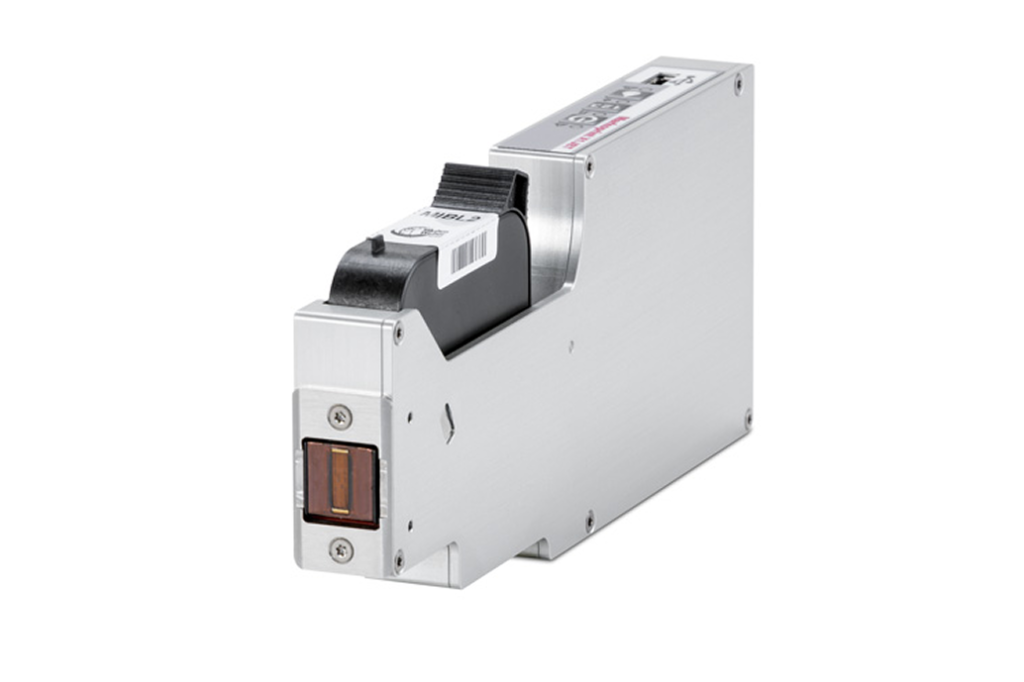
Once you understand these requirements, you can match them to the right coding technology. For most applications, Thermal Inkjet Systems (TIJ) is a top choice because it’s clean, high-resolution, and virtually maintenance-free, and this is where Markoprint stands out.
Fast lines + standard packaging: X1Jet MK3 / Stitch – High-resolution TIJ for cartons, plastics, coated stock.
Portable or off-line coding: X1Jet Pro Handhold – Battery-powered TIJ for bottles, pouches, boxes.
Large or bold case codes: X1Jet LX Ultra – 1-inch print height for trays, corrugated, and bags.
Harsh or wash-down environments: IP-JET – IP65 stainless-steel TIJ built for moisture, dust, and sanitation cycles.
Contact us for a quote and we’ll guide you to the best Markoprint system for your application. If you’d like to see the print quality firsthand, send us your substrate and we’ll produce a free sample print for you.
No, requirements vary by industry, product type, geography and regulation. For example, most perishable foods need date codes, whereas non-perishables may not be required to have a “Use-By” date
It depends:
Plain-language dates are consumer-friendly and ideal for retail food.
Julian or encoded dates are common in manufacturing settings where traceability is internal.
Some products use both: a readable Best By date + a coded batch number.
To know whether your specific product needs a date code, check the guidelines set by:
Your industry’s regulatory agency (FDA, USDA, EPA, or similar agencies depending on the product)
Local state regulations (some states have stricter labeling rules than federal guidelines)
Industry associations (like FMI for food, PCPC for cosmetics)
Retailer or distributor requirements (large retailers often mandate date codes even when not required by law)
The date code type depends on safety, shelf life, regulatory standards, and industry practice:
Best By /Before – For products where quality declines over time but safety is not immediately affected. Used for snacks, canned goods, cereals, beverages, dry foods.
Use-By – For foods that can become unsafe after a certain period (dairy, fresh prepared foods, baby formula, some meats).
Sell-By – Used for retailers to manage shelf rotation. Common for dairy, bakery, and grocery items.
Freeze-By – Recommended when freezing affects quality or longevity. Often used for meats and prepared foods.
Expiration Date (EXP) – Required for products where consuming after the date could be unsafe or ineffective (pharmaceuticals, certain supplements, baby formula).
Get in touch with us to learn more about our services and how we can assist you. Call us or fill out the form below.
Visit AT Information Products at Booth S-3014 to see our industrial coding and marking solutions in action
Get in touch with us to learn more about our services and how we can assist you. Call us or fill out the form below.