What Is Total Cost of Ownership for Inkjet Coding Systems?
Total Cost of Ownership (TCO) for an inkjet coding system is the complete lifecycle cost of owning and operating that equipment — including purchase price, consumables, maintenance, labor, downtime, and integration. For packaging operations, TCO is a more reliable metric than upfront price alone, because hidden operational costs often dwarf the initial investment.
The two most widely used inkjet technologies in packaging are Thermal Inkjet (TIJ) — such as Markoprint systems — and Continuous Inkjet (CIJ). While both print variable data like dates, lot codes, and barcodes, their TCO profiles are significantly different.
What is the difference between TIJ vs. CIJ?
Understanding why TCO differs starts with understanding how each technology works and what the difference is between TIJ and CIJ:
Thermal Inkjet (TIJ) is an on-demand system. It only fires ink when a character or image needs to be printed. Inside each cartridge, tiny resistors heat up almost instantly, creating a small vapor bubble that pushes a precise ink droplet onto the substrate. When the print job is done, the system simply stops — no flushing, no shutdown routine, no wasted ink. The printhead is built into the cartridge itself, so it gets replaced automatically with every ink change, eliminating nozzle wear and clogging as ongoing concerns.
- Continuous Inkjet (CIJ) works very differently. The system runs a constant pressurized stream of ink whether it is printing or not. Droplets are electrically charged and deflected to form characters on the substrate; uncharged droplets are caught by a gutter and recirculated back into the ink reservoir. Because the ink is always moving and always exposed to air, solvents must be continuously added to maintain the correct viscosity. This means CIJ requires three consumable fluids — ink, solvent, and make-up fluid — along with daily nozzle cleaning, filter changes, and defined startup and shutdown procedures to keep the system running correctly.
In short: TIJ only works when you need it, uses one consumable, and manages itself. CIJ runs constantly, requires active fluid management, and demands regular operator attention. That operational gap is where the TCO difference is born.
Total Cost of Ownership: TIJ vs CIJ
| Cost Factor | TIJ (Markoprint) | CIJ |
|---|---|---|
| Initial investment | Lower | Higher |
| Consumables cost | Lower, predictable | 60–70% of lifecycle cost |
| Maintenance | Minimal | Regular, ongoing |
| Downtime risk | Low | Higher |
| Installation complexity | Simple | Complex |
| Operator training | Minimal | Specialist required |
| Best substrate fit | Porous / semi-porous | Non-porous |
| Scalability | Modular | Unit-by-unit |
7 TCO Factors: TIJ vs. CIJ Side by Side
1. Initial Equipment Investment
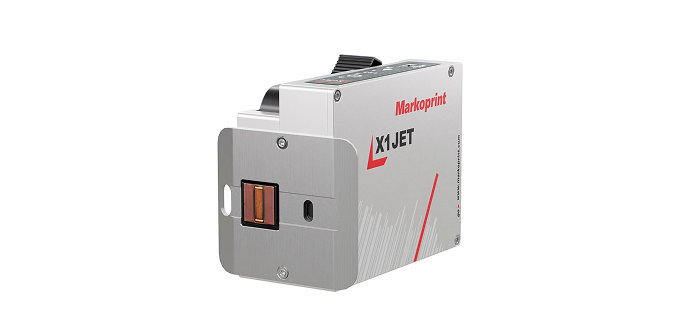
TIJ systems like Markoprint carry a lower upfront cost due to their compact, modular design. CIJ systems involve pumps, reservoirs, and more complex mechanical architecture, which increases the initial price. For operations that don’t require ultra-high-speed continuous production on non-porous substrates, many manufacturers are overpaying for capabilities they don’t need.
TCO verdict: TIJ wins on initial investment for most standard packaging applications.
2. Consumables and Ink Cost
Consumables are the largest contributor to inkjet TCO over a system’s lifetime. CIJ consumables — ink, solvent, and make-up fluid — can represent 60–70% of total lifecycle cost, according to industry estimates. Continuous evaporation and waste add further expense that is difficult to predict or control.
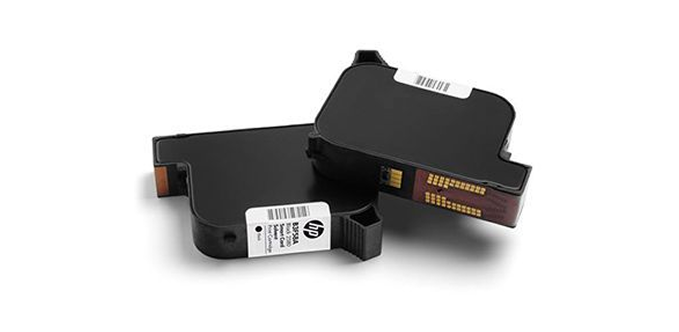
TIJ cartridge-based systems eliminate solvents entirely, produce no evaporation waste, and deliver a predictable, consistent cost per print.
TCO verdict: TIJ delivers substantially lower and more predictable consumable costs.
3. Maintenance and Unplanned Downtime
Unplanned downtime is one of the most expensive hidden costs in any packaging operation. CIJ systems require regular nozzle cleaning, filter changes, fluid top-ups, and scheduled service intervals. Each maintenance event consumes labor and risks line stoppages.
Markoprint TIJ systems are virtually maintenance-free. There are no daily cleaning routines, no flushing procedures, and no startup or shutdown sequences. Cartridge replacement takes seconds.
TCO verdict: TIJ significantly reduces maintenance labor and the risk of unplanned downtime.

4. Installation and Integration Costs
TIJ systems are compact and self-contained, requiring minimal mechanical modification to existing packaging lines. CIJ systems require routing of ink lines, ventilation considerations, and more complex engineering during installation.
TCO verdict: TIJ reduces installation time, engineering cost, and project complexity.
5. Labor and Operator Requirements
CIJ systems require trained operators for setup, adjustment, and daily maintenance. TIJ systems feature simple interfaces, fast message changes, and minimal training requirements — freeing operators for higher-value tasks and reducing the risk of human error.
TCO verdict: TIJ lowers labor dependency and improves overall operational efficiency.
6. Print Quality and Application Fit
Choosing the wrong technology for your substrate is a hidden cost many manufacturers overlook. TIJ offers high-resolution output — ideal for barcodes, logos, and variable data on porous and semi-porous substrates such as corrugated cases, cartons, and pouches. CIJ offers lower resolution but performs well on non-porous surfaces at very high continuous speeds.
TCO verdict: TIJ is the better fit — and lower cost — for most secondary packaging applications.

7. Scalability and Future-Proofing
TIJ systems scale modularly: adding printheads is straightforward and doesn’t require additional standalone units. This makes TIJ well-suited for operations with changing packaging formats, growing SKU counts, or increasing automation requirements.
TCO verdict: TIJ offers greater flexibility as production needs evolve.
When Is TIJ More Cost-Effective Than CIJ?
Markoprint TIJ delivers a lower Total Cost of Ownership in the following applications:
- Case coding and outer carton marking
- Tray and shelf-ready packaging
- Pouches and flexible packaging
- Warehousing and logistics labeling
- Multi-line or scalable operations
CIJ remains the preferred choice for ultra-high-speed production on non-porous surfaces like glass where MEK-based inks are required for adhesion.
How ATIP Helps You Lower Inkjet Coding TCO with Markoprint TIJ
For manufacturers evaluating inkjet coding systems, Total Cost of Ownership is the only metric that tells the complete financial story. AT Information Products (ATIP) helps packaging operations find the right coding solution for their needs. In the majority of applications — particularly case coding, carton marking, and flexible packaging — the Markoprint TIJ systems we supply deliver a measurably lower TCO than CIJ through reduced consumable costs, near-zero maintenance, simpler operation, and greater scalability.
FAQ's
Q:What is the total cost of ownership for an inkjet coding system? A:TCO for an inkjet coder includes the purchase price, ink and consumable costs, maintenance labor, downtime losses, installation, and integration expenses over the system’s lifetime. For most packaging operations, consumables and maintenance represent the largest share of lifetime cost.
Q: Is TIJ or CIJ cheaper to operate long-term? A: In most packaging applications, TIJ is cheaper to operate over the long term. CIJ consumables alone — ink, solvent, and make-up fluid — can account for 60–70% of total lifecycle cost. TIJ eliminates solvents and dramatically reduces maintenance requirements.
Q: When should I choose CIJ over TIJ? A: CIJ is the better choice for very high-speed production lines (ie, 600+ fpm) or when needing to print upward onto the bottom of a can or bottle. Print quality of CIJ is considerably less than TIJ, however.
Q: How do I calculate TCO for an inkjet printer? A: To calculate TCO: add the purchase price + annual consumable spend × system lifespan + annual maintenance cost + estimated downtime cost + installation and integration expenses. Compare this figure — not just the purchase price — across competing systems.