From improving print quality to increasing production throughput, discover five ways manufacturers can optimize their product coding and identification processes.
Packaging operations face constant pressure to increase productivity, maintain code quality, minimize downtime, and adapt to changing production requirements. At the same time, manufacturers must prepare for evolving barcode standards and find ways to integrate coding equipment seamlessly into their packaging lines.
Whether you’re coding corrugated shipping cases, printing variable information on product packaging, or marking flat materials before assembly, the right coding solution can make a measurable difference in production efficiency.
As the packaging industry gathers in Chicago for PACK EXPO International 2026, it’s an ideal time to evaluate your current coding process and identify opportunities for improvement.
Here are five common coding challenges worth addressing.
1. Limited Print Height and Poor Code Quality
The challenge: Many manufacturers need to print more information on their packaging, including larger text, barcodes, logos, and multiple lines of product data. However, conventional half-inch thermal inkjet printheads can limit the amount of information printed in a single pass.
Some applications attempt to overcome this limitation by combining multiple printheads, adding complexity to the installation and potentially creating alignment challenges where printed images must be stitched together.
The solution: Consider a coding system designed to deliver a larger print area in a single pass.
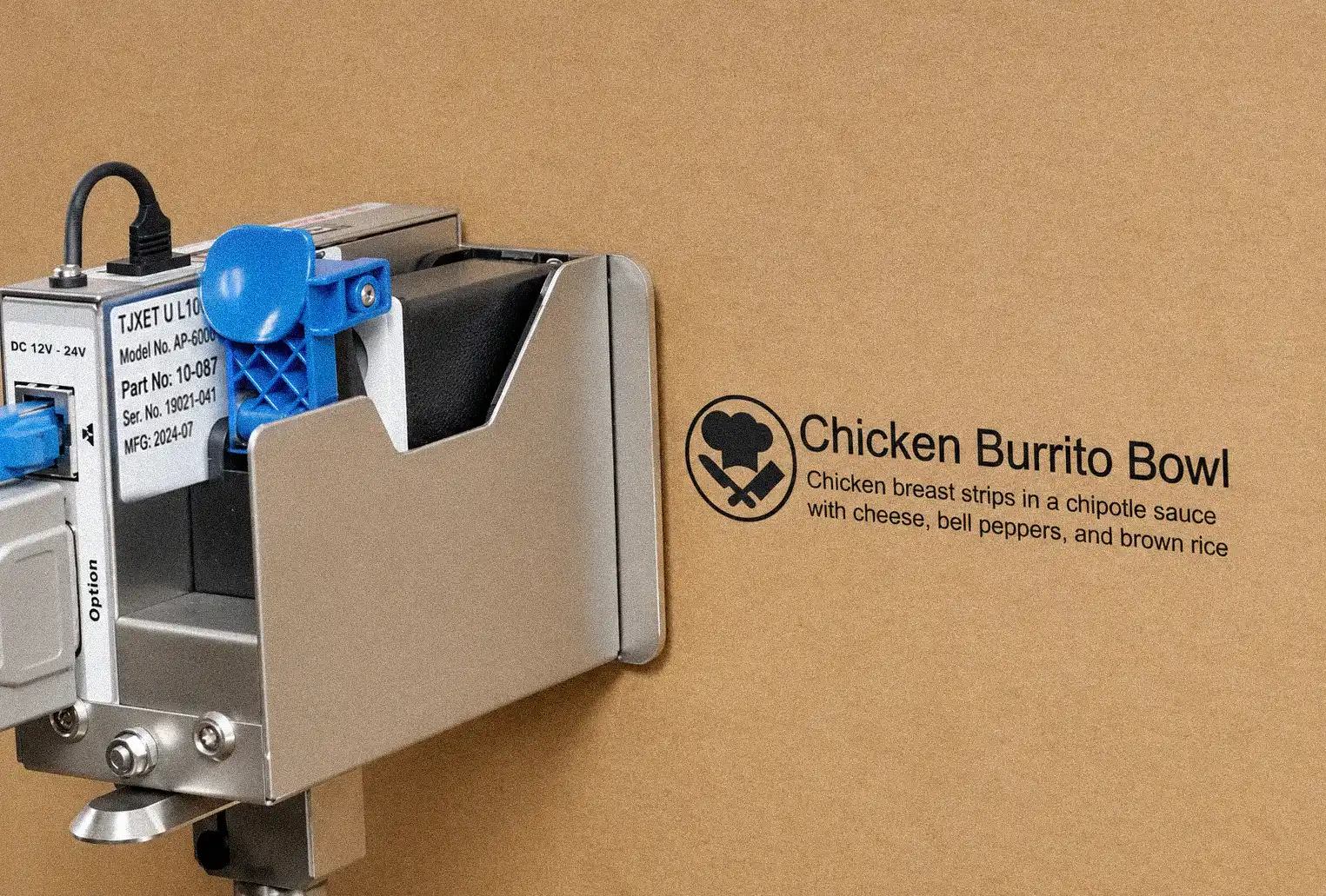
The Markoprint X1Jet LX Ultra offers a full 1-inch print height using Lexmark-based thermal inkjet technology. This allows manufacturers to print larger messages, multiple lines of text, and other variable information without stitching together multiple half-inch printheads.
For corrugated case coding and other applications requiring larger print areas, a wider print height can simplify integration while helping maintain consistent print quality.
What to consider: Evaluate the size and complexity of your current messages. Could a larger print area simplify your setup, improve readability, or accommodate additional information?
2. Preparing for GS1 Sunrise 2027
The challenge: The packaging industry is moving toward greater use of two-dimensional (2D) barcodes that can carry more information than traditional linear barcodes. GS1 Sunrise 2027 is an important industry initiative encouraging retailers to be ready to scan 2D barcodes at the point of sale by the end of 2027.
For manufacturers, this transition raises important questions about barcode generation, print quality, verification, and the capabilities of existing coding equipment.
The solution: Start evaluating your barcode printing requirements now.
Depending on the application, manufacturers may need to print QR Codes powered by GS1 or GS1 DataMatrix codes containing product identifiers and other variable information. These codes must be printed clearly enough to support reliable scanning throughout the supply chain.
Markoprint coding systems, using iDesign software to create messages, support a range of barcode and 2D code applications. Manufacturers should assess the specific barcode formats, data requirements, substrates, and print-quality requirements relevant to their operations.
Preparing ahead of time can help identify equipment or process changes before new requirements affect production.
What to consider: Can your current coding system generate and print the barcode formats your customers will require? Have you tested the codes on your actual packaging materials to confirm readability?
3. Integrating Coding Equipment into Existing Packaging Machinery
The challenge: Adding or upgrading a coding system can be complicated when space is limited or production equipment has specific mounting, triggering, and communication requirements.
Manufacturers may need to print on cartons, cases, pouches, trays, labels, or other packaging as products move through a production line. A coding system that doesn’t integrate well can create unnecessary complexity and slow implementation.
The solution: Select coding technology with integration flexibility in mind.
Compact thermal inkjet systems can be integrated into a variety of packaging equipment, including conveyors, case erectors, case sealers, form-fill-seal machines, and label dispensing systems. Sensors, product detection, and appropriate controls help coordinate printing with product movement.
Markoprint industrial inkjet systems offer integration options for a wide range of packaging applications. The key is matching the printer, mounting arrangement, controls, and software to the specific equipment and production environment.
Planning the integration early can help reduce installation challenges and support a more reliable production process.
What to consider: Before selecting a printer, review available mounting space, product speed, print location, triggering requirements, message management, and the packaging materials being used.
4. Reducing Downtime and Maintenance
The challenge: Unplanned downtime can disrupt production schedules, create labor inefficiencies, and increase operating costs. Coding equipment can contribute to these problems when it requires frequent maintenance, complicated cleaning procedures, or time-consuming troubleshooting.
Consumables, operator training, and the time required to recover from a printing issue should all be considered when evaluating the total cost of ownership.
The solution: Look beyond the initial purchase price and evaluate the complete coding process.
Thermal inkjet (TIJ) technology offers several potential advantages, including cartridge-based ink delivery and straightforward consumable replacement. In many applications, TIJ can reduce routine maintenance requirements compared with more maintenance-intensive continuous inkjet (CIJ) systems.
Markoprint TIJ solutions use replaceable ink cartridges that incorporate the printhead and ink supply, simplifying consumable changes. Actual maintenance requirements and operating costs will depend on the application, ink, production environment, and equipment configuration.
A total cost of ownership evaluation should consider consumables, maintenance labor, downtime, cleaning, and operator involvement—not just the printer’s purchase price.
What to consider: How much time does your current coding process consume through maintenance, troubleshooting, and consumable changes? Could a different technology simplify daily operation?
5. Boosting Throughput When Coding a Variety of Flat Substrates
The challenge: Manufacturers that process flat substrates often face a different coding challenge: how to increase throughput while maintaining consistent print quality across a variety of materials and product sizes.
Examples include flat cartons, labels, cards, inserts, sheets, and other materials that need variable information printed before they move to the next stage of production. When operators must position, print, and handle each item individually, the process can become a bottleneck—particularly when product mix changes frequently or production volumes increase.
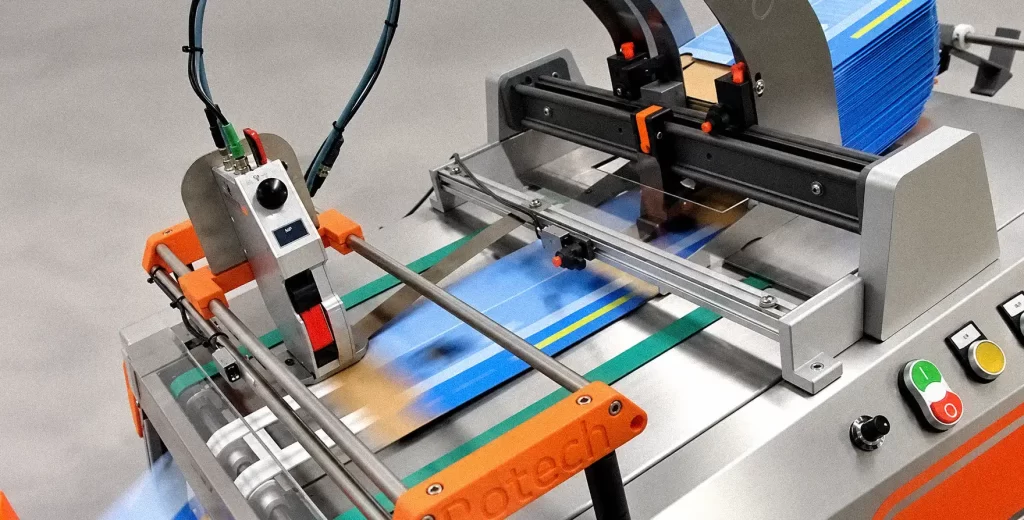
The solution: Consider an integrated feeder and coding system that automates material feeding and printing.
By combining a feeder with an industrial inkjet printer, manufacturers can automate the presentation of individual flat items to the printhead, reducing manual handling and helping maintain a consistent printing process. Depending on the system configuration and application, this approach can support higher throughput and more repeatable results across different substrates.
AT Information Products offers integrated feeder coding solutions designed to combine material feeding with Markoprint inkjet printing. These systems can be configured for applications requiring variable data such as lot numbers, dates, product identification, and barcodes on flat materials.
When evaluating an integrated solution, it is important to consider substrate dimensions, thickness, surface characteristics, feeding behavior, required print content, and target production speed. Testing with actual materials helps establish achievable throughput and reliable feeding performance.
What to consider: Could automating the feeding and coding process reduce manual handling, improve consistency, or increase the number of flat items your operation can process per hour?
Find the Right Coding Solution at PACK EXPO International 2026
Every packaging operation has different requirements. The best coding solution depends on your production speed, packaging materials, print content, available space, and integration needs.
Addressing these five challenges can help manufacturers identify opportunities to improve print quality, prepare for evolving barcode requirements, simplify equipment integration, reduce downtime, and increase throughput.
Attending PACK EXPO International in Chicago?
Visit AT Information Products at Booth S-3014, October 18–21, 2026, to explore Markoprint industrial inkjet coding solutions and discuss your specific application with our team.
Whether you’re looking to improve corrugated case coding, print larger messages, prepare for 2D barcodes, integrate coding into existing machinery, or automate the coding of flat substrates, we’d welcome the opportunity to help you find the right solution.